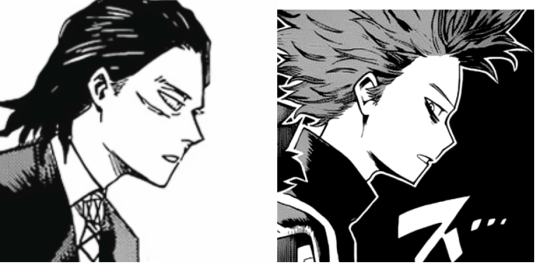
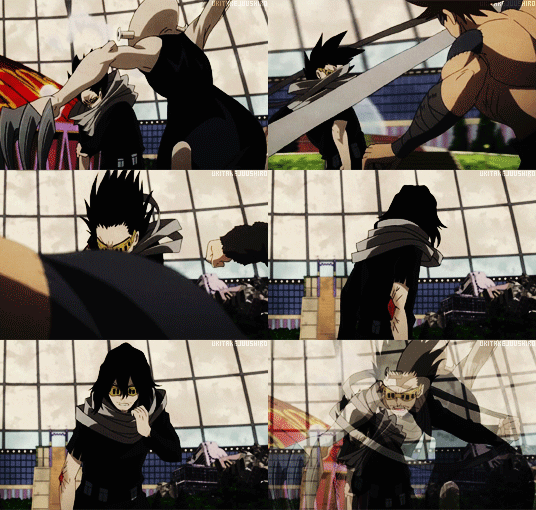
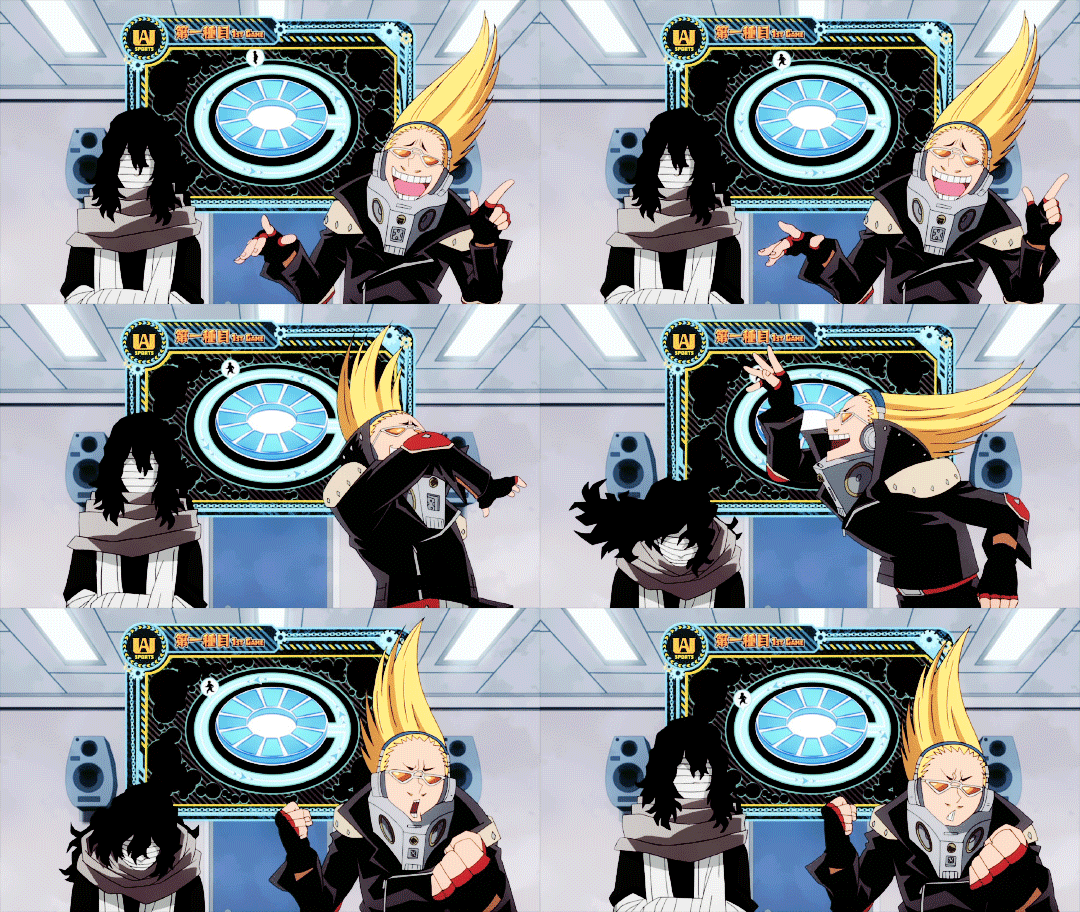
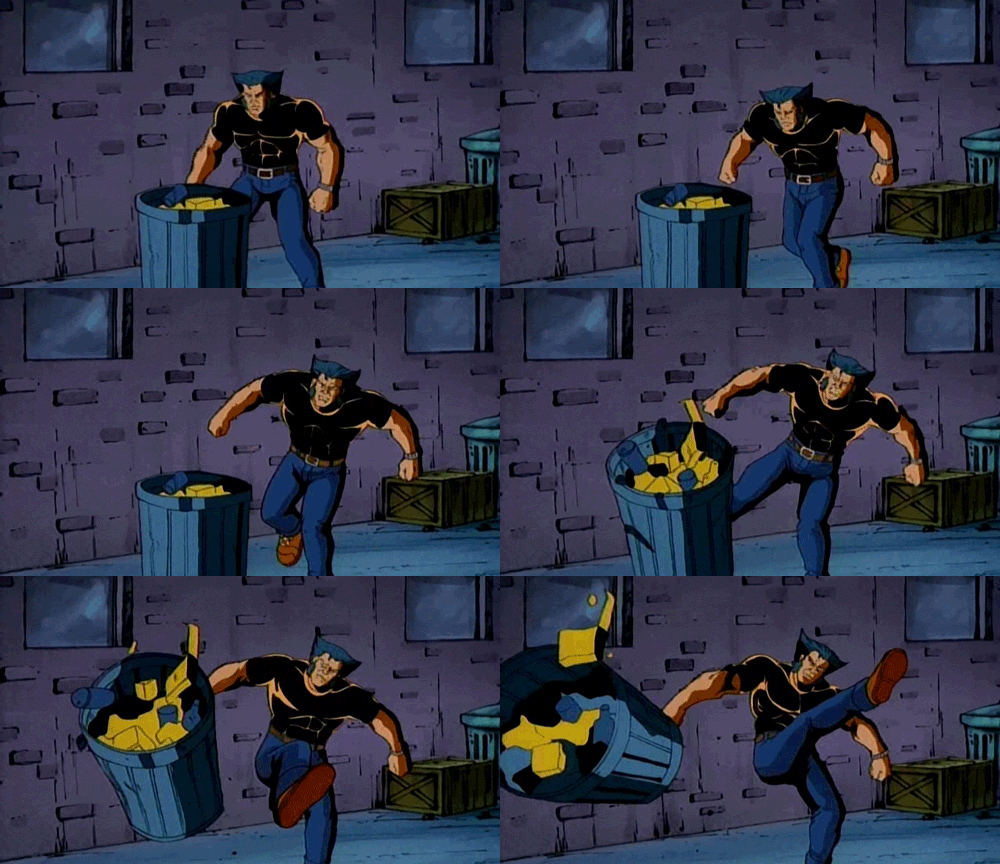
And I know I’ve already posted this but I’m just shook of how alike they are…..
Not only psychologically but physically too.
And I know that Aizawa is only 30………. But I just love these two.
They have so much in common and I seriously want Aizawa to become at least his mentor ( Like All might with Midoriya )
let me dream
Tumblr agrees with me.
Alright alright…….. My last clue…
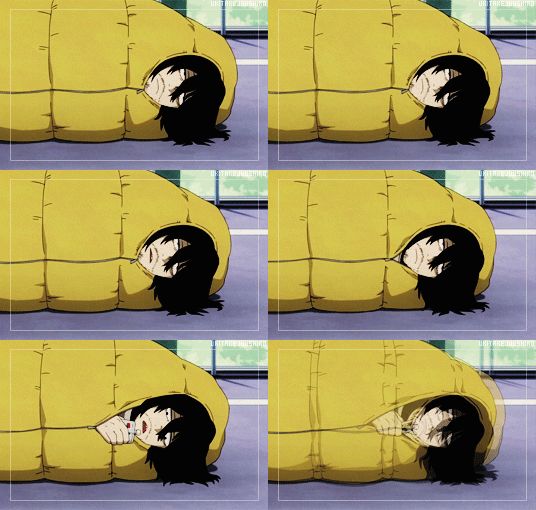
Guess who rub their neck too?
And they have a mutual love of cats? Hah hah. Could be an older sister in the Aizawa family. That would also explain the different surnames. And then he can be weird Uncle Shouta.
Browsing Reddit, I came across an extremely effective post about why some creatives respond very poorly to criticism, or even for those of us who respond well, why it can feel like an attack even though in your head you know it isn’t.
Criticism creates a mental conflict, but not always that kind.
Imagine if you wrote a final essay for your literature class, really
did your best on it, turned it in, and the teacher gave it 100%. Elated,
you take it home to show it off to your dad. Your dad says “You got a
D? You really should have tried harder.” You think WTF, you squint at
the paper and you’re pretty damn sure it says 100%, A+, Good work. But
your dad says “No, it clearly says 63%, D-, disappointing.” Then you
start to realize you’re living in some kind of warped reality where your
dad sees something on the paper completely different than what you see,
and you start wondering if you even know what’s real anymore.
This is what it feels like to get a criticism. It casts into doubt
your own definition of “good” which is probably the basis of your entire
creative process. It’s not even an issue of admitting weakness.
Admitting weakness is easy. What’s not easy is having your instincts
cast into doubt and not knowing whether to trust yourself anymore.
Do I trust this critic?
Do I trust myself? Some combination of the
two?
Do I stand by my decisions or not?
Do I make changes even though I
don’t understand how they will help?
Will the changes completely
undermine the artistic vision I wanted for this?
Will it defeat the
whole point I was going for?
I can’t feel the emotional reasoning behind
making changes, so how will I know if my change is for the better or
worse?
Is the critic just not the right audience for this? Is the critic
biased? Is the critic just having a bad day?
Should I ignore them
altogether, and just keep doing this for the people who like it?
Are my
fans wrong and simpleminded?
Am I even doing anything of significance?
Should I give up here?
These are all questions which artists ask
themselves when they receive criticism. They’re tricky, ambiguous
questions that don’t always have a correct answer. Many newcomers don’t
even know how to approach these questions, so criticism can often feel
like a personal attack even if both sides mean well.
That’s not to say that criticism itself is bad, but if you get a
better idea of what a criticism is doing psychologically to the
receiver, you might find yourself offering more effective, well-received
advice.
This ties in pretty closely to the advice I often give on this very blog, about how to deal with negative feedback; above all, trying not to dwell on it. Before you give any response, always take time to calm down.
This is a pretty universal problem that affects all creatives across all media. You’d have to be as emotionless as a stone to not fall prey to it occasionally.
Part of being a writer is building up creative confidence. This is the faith in yourself to be able to write something and put it out into the world, and to know, deep down, that this work has value, to you and to your audience.
You may, later, discover that this work isn’t all that good, but that doesn’t matter. What matters is that it was a stepping stone to the person you are now, and the work you’re producing today.
Whenever you create a piece of work, make sure you internalise why you made that work. What it meant to you. It doesn’t matter if that work was a prize-winning literary novel or a scrawling of Vegeta from DBZ drawn in pencil on lined paper. If the work expresses something you can’t contain, something you have to get down on paper, over time you’ll develop the creative confidence to accept that even if it’s “bad”, that isn’t what’s important. The end result isn’t as important as the work itself.
Creative Confidence isn’t something you just develop overnight. It takes work. It’ll probably take a few embarrassing moments too, and those will be the hurtful types that’ll lead to “arguments you win in the shower” 5 years later. It takes different durations for different people. However, if you work at it, it’s something I believe is within the reach of everyone.


















 A Beautiful Monster